Wednesday, June 4, 2014


Tuesday, June 3, 2014
Toward Spiritual Conversation & Friendships
Toward Spiritual Conversation & Friendships
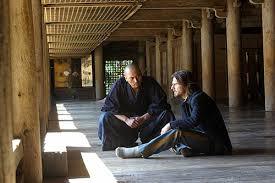
One of my favorite scenes from the movie “The Last Samurai” is between Katsumoto and Captain Algren (a captive). In several different places there are comments about having a “good conversation.”
In one place, like this scene, Katsumato askes him about his part in the war against the Native American Indians. Algren says, “Read a book!” Katsumoto replies, “I would rather have a good conversation.”
In another place, Katsumoto says, “”Many of our customs seem strange to you. And the same is true of yours. For example, not introducing yourself is considered extremely rude, even among enemies… [later]… I have introduced myself. You have introduced yourself. This is a very good conversation.”
Finally, towards the end of the story, when Katsumto and Algren are no longer enemies but friends, and Katsumoto is facing his death, Algren says, “ I will miss our conversations.”
This is a beautiful example of how a “conversation”, even between enemies or those who hold opposing views, can become friends, perhaps even, spiritual friends.
Spiritual Friendship and Conversation is an important part of life and our spiritual journey; but one that is too often neglected. For those who hold onto their own perspectives and versions of belief, truth, and spiritualities with fundamentalist rigor, often cannot see beyond their own lense and wordview. As such, they tend to operate more out of fear and judgement than love and mercy; and spend more energy ‘preaching and proclaiming’ than listening, receiving and sharing.
Father Raimon Panikkar says that if all we do is look out of our window and never talk to our neighbor, then we will think that what see out of our window is all there is to see and know; but if we talk to our neighbor and listen to his or her stories and narratives that they see through their window, then our own world and understanding will grow more beautiful and wonderful.
Its ok to share share our faith with others but too often our western form of evangelization (Catholic or Protestant) has been a Proclamation, Belief and Belonging System- we proclaim our faith only within the boundaries of Borders, Language and Culture (ex: Roman Empire or European Colonization); and people never really belong in our world or our church unless and until they believe.
The Celtic Church had a different model of Belonging, Proclamation and Belief. They went outside the boundaries and borders of culture and set up missions at the crossroads of life; and allowed people to belong to a community of friendship; and within that context their faith was proclaimed and many came to belief.
But Inter-spiritual conversation is also important. The ancient geographical boundaries and borders have been shattered by our ability to fly anywhere in the world within a matter of ours and of course the Internet. There is a collision of cultures, religions, worldviews, and spiritual paths today. Its important that we embrace this collision with honor and respect, seeking out areas of common ground, as well as honoring the essential and important differences.
I have many friends who are from other Christian denominations and faith traditions- Buddhist, Hindu, Pagan and Atheist. We all know where each other comes from, we share and honor or similarities and differences. Having a good conversation does not mean compromising our own beliefs; but requires that we hold our beliefs from a deeper heart of understanding, love and respect.
For example, I have a friend who does not believe in God but we have had many wonderful and deep conversations. Though we dont share all the same beliefs, we do share a friendship; and because of that friendship I’ve been invited to officiate a special ceremony in her life. Her term of endearment is “My priest says I’m a pagan!” I have another friend who came to me for ministry and we just sat on the porch and smoked pipes together while he shared his heart. I listened and we prayed together.
We put God, the Divine, and the Sacred in a very small box; but ultimate reality cannot be contained in our little boxes no matter how well our theological construction is. On of the saints said for everything true I could say about God, he is even less like that in his actual reality which is so far beyond anything I could say. St Thomas Aquinas, who wrote many great theological works including the Summa Theologica, after a spiritual experience with God said, “All I have written is only hay and stubble compared with all that God truly is.”
So, let us encounter others and have a “good conversation.’
Enjoy this scene from The Last Samurai on having a good conversation…
Saturday, August 3, 2013
‘a’ christian perspective on sexuality (the abler soul)
Within Christian tradition there is a class of relationships sometimes called the ‘Lover and the Beloved" (Song of Solomon) or the “Abler Soul" (term from John Donne)- a particularly intense relationship that “is a path of true love" that is more than mere romance or passion “but rather…conforms to and reveals the authentic pattern of each partner’s soul…. the Abler Soul must be forged…"
PRECONDITIONS:
1. a strong erotic connection…
2. strong spiritual yearning…
3. innate emotional trust…
"…the abler souls must always be beloveds…" (because)…"the erotic, sexual, energy is the specific energy through which this union of souls comes about. Sexual Energy provides the force of fusion that holds the two formerly separate individualities in the …bonding of one soul.
…sexual energy is understood as something very different from libido, or lust…it is the highest form of Transformational Energy, the finest and most subtle spiritual energy that human beings can work with directly… Sexual Energy is the agent of all transformation- not just physical procreation, but Every Form of Creativity: (prayer, poetry, and spiritual transformation)…
THE COMPLETE MUTUALITY OF PERSONS (Vladimir Solovyov):
"The meaning and worth of love…is that it really forces us, with all our being, to acknowledge for another the same absolute central significance…Love is important not only as one of our feelings…as the shifting of the very center of our personal lives. This is the characteristic of every kind of love, but predominantly of sexual love (erotic love); it is distinguished from other kinds of love by greater intensity, by a more engrossing character, and by the possibilities of a more complete…reciprocity. Only this love can lead to the real and indissoluble union of two lives into one;and only of it does holy scripture say; ‘They shall be one flesh’; that is, shall become One Real Being."
-excerpts and thoughts from “Love is Stronger Than Death: The Mystical Union of Two Souls" by Rev. Cynthia Bourgeault
Monday, May 13, 2013
Time Between Times: Practicing our Faith in times of Conflict
Time Between Times: Practicing our Faith in times of Conflict...
Summary of my Sermon/talk at St. David's Anglican Church in fairfax, CA on Sunday 5/12/13.
Readings: Acts 16:16-34 Psalm 47 Revelation 22:12-14,16-17,20 John 17:20-26
Today is not only the Celebration of Mother's Day but in the Christian calendar it is also a celebration of another rather obscure Holy Day- The Seventh Sunday After Easter. Why is this day important? It is because it is the time between times, the interval between Ascencion day a few days ago and Pentecost Sunday next week.
It is a celebration of those many in between times found in Holy Scripture, as well as in our own lives. Such as the Intertestamental times between the prophets of the Old testament and John the Baptist in the New, The night of the Last Supper and the Passion and Crucifixion of Jesus, and the First and Second Comings of Christ, and so on. It is in such a context that we find todays readings.
The Gospel reading, from which I draw my primary text, is a portion of Christ's High Priestly Prayer about Oneness and Unity- being One with God as He is One, being One with each other (our community, our neighbor, even love for our enemies), and Oneness with ourselves ("If our eye is Single we shall be full of light but if it is not, how great is that darkness?).
However, this prayer is part of a much larger context, the scene of the Last Supper and another Time between Times, designated as 'between the Two Evenings (Ex. 12.6; Lev. 23.5, Num 9.3-5). It is the time between times of Christs own celebration of the Pascha with his church: "With fervent desire I have desired [epithumia epethumesa] to eat this Passover with you before I suffer...and ...'however, I tell you that I shall not eat of it [again], until it can be administered in the Kingdom of God.'
Most of us may think of this as a very intimate night spent with his disciples where he instituted the chief sacrament of the Christian faith and our primary act of worship- Holy Communion. And such it was. But it was also a time of interpersonal conflict between the disciples arguing who would be the greatest in the kingdom and possibly who would be seated in the place of honor at the table that night. It was the scene of Christ's solemn warning against the "Son of Perdition" who would betray him; and the fortelling of Peter's Denial. It was also a moment of Christ's own "Trouble in Spirit" (Jn 13.21).
Rather than merely chastising and openly rebuking the disciples he simply told Judas to go and do that which he needed to do, gave a New Commandment "that you love one another just as I loved you; and gave words of comfort to his friends-'Do not let your hearts be troubled. Believe in God, believe also in me...' prayed for our oneness with the Father; and taking off his outer garments, took a towel and dressed as a slave, washing their dirty feet, showing them by example that the greatest in the kingdom must be the least and must love everyone...
We are not called merely to profess what we believe nor to engage in endless controversies with others over points of doctrine but to Practice our Faith in all the circumstances of life, even in the midst of conflict and betrayals.
Spiritual Practice, not Mental and Theological Assents, is our calling. That is, we are not called to just Proclaim what we believe, but to embody and manifest that belief through our love and oneness with God, others, and even ourselves...
The example was from the reading of Acts where Paul and Silas are put into prison and their feet placed in the stocks. But they found the occassion an opportunity for Spiritual Practice rather than panic, anger or bitterness over their situation. They turned their attentions to God in worship and singing praises to God. The result was that many prisoners and even the jailer and his family came to a place of faith in Christ, because of how they lived out their faith, not because of what they claimed to believe. That came later.
Our call is to Spiritual Practice, in all of life's circumstance. Every situation is an opportunity for spiritual practice. Even our enemies can be our best teachers as they can more than others show us where our triggers and weaknesses are, where we need to the light of Christ to disperse our shadows....
Summary of my Sermon/talk at St. David's Anglican Church in fairfax, CA on Sunday 5/12/13.
Readings: Acts 16:16-34 Psalm 47 Revelation 22:12-14,16-17,20 John 17:20-26
Today is not only the Celebration of Mother's Day but in the Christian calendar it is also a celebration of another rather obscure Holy Day- The Seventh Sunday After Easter. Why is this day important? It is because it is the time between times, the interval between Ascencion day a few days ago and Pentecost Sunday next week.
It is a celebration of those many in between times found in Holy Scripture, as well as in our own lives. Such as the Intertestamental times between the prophets of the Old testament and John the Baptist in the New, The night of the Last Supper and the Passion and Crucifixion of Jesus, and the First and Second Comings of Christ, and so on. It is in such a context that we find todays readings.
The Gospel reading, from which I draw my primary text, is a portion of Christ's High Priestly Prayer about Oneness and Unity- being One with God as He is One, being One with each other (our community, our neighbor, even love for our enemies), and Oneness with ourselves ("If our eye is Single we shall be full of light but if it is not, how great is that darkness?).
However, this prayer is part of a much larger context, the scene of the Last Supper and another Time between Times, designated as 'between the Two Evenings (Ex. 12.6; Lev. 23.5, Num 9.3-5). It is the time between times of Christs own celebration of the Pascha with his church: "With fervent desire I have desired [epithumia epethumesa] to eat this Passover with you before I suffer...and ...'however, I tell you that I shall not eat of it [again], until it can be administered in the Kingdom of God.'
Most of us may think of this as a very intimate night spent with his disciples where he instituted the chief sacrament of the Christian faith and our primary act of worship- Holy Communion. And such it was. But it was also a time of interpersonal conflict between the disciples arguing who would be the greatest in the kingdom and possibly who would be seated in the place of honor at the table that night. It was the scene of Christ's solemn warning against the "Son of Perdition" who would betray him; and the fortelling of Peter's Denial. It was also a moment of Christ's own "Trouble in Spirit" (Jn 13.21).
Rather than merely chastising and openly rebuking the disciples he simply told Judas to go and do that which he needed to do, gave a New Commandment "that you love one another just as I loved you; and gave words of comfort to his friends-'Do not let your hearts be troubled. Believe in God, believe also in me...' prayed for our oneness with the Father; and taking off his outer garments, took a towel and dressed as a slave, washing their dirty feet, showing them by example that the greatest in the kingdom must be the least and must love everyone...
We are not called merely to profess what we believe nor to engage in endless controversies with others over points of doctrine but to Practice our Faith in all the circumstances of life, even in the midst of conflict and betrayals.
Spiritual Practice, not Mental and Theological Assents, is our calling. That is, we are not called to just Proclaim what we believe, but to embody and manifest that belief through our love and oneness with God, others, and even ourselves...
The example was from the reading of Acts where Paul and Silas are put into prison and their feet placed in the stocks. But they found the occassion an opportunity for Spiritual Practice rather than panic, anger or bitterness over their situation. They turned their attentions to God in worship and singing praises to God. The result was that many prisoners and even the jailer and his family came to a place of faith in Christ, because of how they lived out their faith, not because of what they claimed to believe. That came later.
Our call is to Spiritual Practice, in all of life's circumstance. Every situation is an opportunity for spiritual practice. Even our enemies can be our best teachers as they can more than others show us where our triggers and weaknesses are, where we need to the light of Christ to disperse our shadows....
Friday, May 11, 2012
Peace the opposite of Safety
"There is no way to peace along the way of safety. For peace must be dared, it is itselft the great venture and can never be safe. Peace is the opposite of security. To demand guarantees is to want to protect oneself. Peace means giving oneself completely to God's commandment, wanting no security, but in faith and obedience laying the destiny of the nations in the hand of Almighty God, not trying to direct it for selfish purposes. Battles are won, not with weapons, but with God. They are won when the way leads to the cross."
- Dietrich Bonhoeffer,
Peace Speech at Fano Conference,
Against the Nazi Regime
- Dietrich Bonhoeffer,
Peace Speech at Fano Conference,
Against the Nazi Regime
Friday, November 25, 2011
Questions: Is there such a thing as a Real Christian? vs. What is the Gospel of Jesus the Christ?
A friend of mine, on another post, asked the question, is there such a thing as a real Christian? There were a number of interesting comments and answers in this regard.
In mulling this question over, Is there such a thing as a real Christian?, it seems to me that its the wrong question. It seems to me, that the question is, What is the Gospel of Jesus the Christ? Even the word "gospel" has been watered down to refer to a method for getting saved, an escape plan for the life hereafter, or even personal piety and individualistic religious experience.
But the word is a technical term referring to a royal announcement of a great victory, or the birth, or accession, of an Emperor. One example would be the Priene inscription from about c. 9 BC, found on the Asia Minor coast, which says,
“Since Providence, which has ordered all things and is deeply interested in our life, has set in most perfect order by giving us Augustus, whom she filled with virtue that he might benefit humankind, sending him as a savior [swthvr], both for us and for our descendants, that he might end war and arrange all things, and since he, Caesar, by his appearance [ejpifanei'n] (excelled even our anticipations), surpassing all previous benefactors, and not even leaving to posterity any hope of surpassing what he has done, and since the birthday of the god Augustus was the beginning of the good tidings for the world that came by reason of him."
The Gospel of Jesus the Christ is a royal announcment that Jesus the Christ is Lord, Lord of the world, Lord of the cosmos, Lord of earth and heaven, by virtue of his Incarnation, Death and Resurrection; that He has inaugarted the beginnings of New Creation and Lordship, over against all other principalites and powers (earthly or spiritual- especially Ceasar at the time); and is a Summons of Allegiance to Jesus as Lord; and that there is no area of human life that is exempt from this Summons. No Herald of the ancient world would have thought that a Gospel of Ceasar would be an invitation to accept Ceasars rule if you felt like it. A Gospel is an Announcement and Summons to Allegiance, not an experience. In fact the only experience guaranteed by Jesus was to pick up our cross and follow Him.
I know this is a heavy thought but the question is not about what makes a good or bad Christian; but what we do with the Gospels royal announcement and Summons to allegiance to Jesus Christ as Lord. Only when we've really dealt with this question, can we then ask the questions that surely must follow, including how we've messed this up too throughout our attempts over the past 2,000 years; or what we can do about it now.
We must first deal with the the Gospels royal announcement and Summons to allegiance to Jesus Christ as Lord.
In mulling this question over, Is there such a thing as a real Christian?, it seems to me that its the wrong question. It seems to me, that the question is, What is the Gospel of Jesus the Christ? Even the word "gospel" has been watered down to refer to a method for getting saved, an escape plan for the life hereafter, or even personal piety and individualistic religious experience.
But the word is a technical term referring to a royal announcement of a great victory, or the birth, or accession, of an Emperor. One example would be the Priene inscription from about c. 9 BC, found on the Asia Minor coast, which says,
“Since Providence, which has ordered all things and is deeply interested in our life, has set in most perfect order by giving us Augustus, whom she filled with virtue that he might benefit humankind, sending him as a savior [swthvr], both for us and for our descendants, that he might end war and arrange all things, and since he, Caesar, by his appearance [ejpifanei'n] (excelled even our anticipations), surpassing all previous benefactors, and not even leaving to posterity any hope of surpassing what he has done, and since the birthday of the god Augustus was the beginning of the good tidings for the world that came by reason of him."
The Gospel of Jesus the Christ is a royal announcment that Jesus the Christ is Lord, Lord of the world, Lord of the cosmos, Lord of earth and heaven, by virtue of his Incarnation, Death and Resurrection; that He has inaugarted the beginnings of New Creation and Lordship, over against all other principalites and powers (earthly or spiritual- especially Ceasar at the time); and is a Summons of Allegiance to Jesus as Lord; and that there is no area of human life that is exempt from this Summons. No Herald of the ancient world would have thought that a Gospel of Ceasar would be an invitation to accept Ceasars rule if you felt like it. A Gospel is an Announcement and Summons to Allegiance, not an experience. In fact the only experience guaranteed by Jesus was to pick up our cross and follow Him.
I know this is a heavy thought but the question is not about what makes a good or bad Christian; but what we do with the Gospels royal announcement and Summons to allegiance to Jesus Christ as Lord. Only when we've really dealt with this question, can we then ask the questions that surely must follow, including how we've messed this up too throughout our attempts over the past 2,000 years; or what we can do about it now.
We must first deal with the the Gospels royal announcement and Summons to allegiance to Jesus Christ as Lord.
Sunday, November 20, 2011
Dark and Difficult Times....
"Dark and Difficult times lie ahead; soon we must all face the choice between what is Right and what is easy."
---Professor Dumbledore to Harry Potter, in the Goblet of Fire
---Professor Dumbledore to Harry Potter, in the Goblet of Fire
Subscribe to:
Posts (Atom)


 Posts
Posts

