Monday, September 18, 2017

BEEing Sincere

On BEEing "Sincere"

We went to the Greek Festival last week at Saint Demetrios Greek Orthodox Church in Concord. While there, we were able to go on a tour of the church with Father  Marin Staté- who told us about the use and symbolism of lighting Beeswax candles as act of worship.

He said when a candle is lit it provides light, warmth and a sweet aroma; but for a candle to do its job it must be consumed by the heat and melt away. If it just remains in a box in the back of the church it is not doing its job. It must be lit and be consumed. and it is the same for all of us- if our lives are not lit with the fire of Christ, and if we are not consumed by His light, love and life, then we are not doing our job. So, become a light in the world!

He also said the our English word "Sincere" comes from the Latin words  "sine cera" meaning the Quality of Honey.  Honey vendors in the ancient Roman markets would cry out, “Sine cera,” to assure prospective buyers that their product was pure and free from wax.

A religious dictionary defined the word as follows: ‘Sincere is that which is without mixture, as honey without wax’.

To be "sine cera" or sincere then is to be pure and unmixed, which is how our Christian lives should be.

Tuesday, May 3, 2016

Silence and Listening

I grew up in the pentecostal tradition. Loud exuberant and emotionally charged expressions of worship were practically required. And the Gift of Speaking in Tongues (Glossolalia) was the spiritual black belt.
Sometimes I am a bit lost trying to follow along in Eastern Orthodox Liturgies. Even after being Anglo-Catholic for twenty years.
But in those times when I am unsure of where we are in the Liturgy, I am learning to simply sit, or stand; to be silent, still, and quiet.
To simply listen to prayers, scripture readings, and hymns. All chanted and sung in a contemplative way… To let the Divine Liturgy or prayer service simply wash over me…
To soak in the silence and Grace of the Holy Spirit…
Our minds, our stream of consciousness; and our emotional torrents, are always sounding an alarm! Here I am! Pay attention to me! Notice me!
But the ancient liturgies are a “deep calling to deep…”
I am learning to simply be silent. And to listen. And to during those moments of disorientation or uncertainty, to simply pray The Jesus Prayer… Quietly. Silently. With each breath or heart beat…
“Lord Jesus Christ,
Holy Son of God,
Have mercy on me,
A sinner…”

Catacomb Catechumens- (Exploring Eastern Orthodoxy)


Catacomb Catechumens- (Exploring Eastern Orthodoxy) is a group for people who are exploring the Eastern Orthodox Church to share and discuss their experiences and challenges on the road toward the becoming Orthodox.


/Catacomb Catechumens (Exploring eastern Orthodoxy)

Monday, May 2, 2016

Russian Vodka & Easter!!!???


Russian Vodka & Easter!!!??? We enjoyed our first Eastern Orthodox Holy Week and midnight Pascha (Easter) service! One of the Russian ladies told me several days ago that its a long week but there will be a party at the end with lots of wine and vodka! She was right and I was introduced to several traditional Russian Vodka infusions! I dont remember the names of them all but one lady named Sasha introduced me to Żubrówka- vodka infused with Bison Grass! She told me to drink it all in one sip the way her Father taught her to drink it! Goes down very smooth and mellow but has has a nice kick afterwards!!! I can get used to this! 

Wednesday, June 4, 2014

Tuesday, June 3, 2014

Toward Spiritual Conversation & Friendships

Toward Spiritual Conversation & Friendships
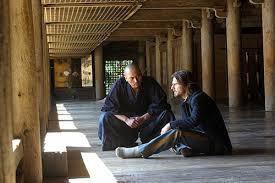
image
One of my favorite scenes from the movie “The Last Samurai” is between Katsumoto and Captain Algren (a captive). In several different places there are comments about having a “good conversation.”
In one place, like this scene, Katsumato askes him about his part in the war against the Native American Indians. Algren says, “Read a book!” Katsumoto replies, “I would rather have a good conversation.”
In another place, Katsumoto says, “”Many of our customs seem strange to you. And the same is true of yours. For example, not introducing yourself is considered extremely rude, even among enemies… [later]… I have introduced myself. You have introduced yourself. This is a very good conversation.” 
Finally, towards the end of the story, when Katsumto and Algren are no longer enemies but friends, and Katsumoto is facing his death, Algren says, “ I will miss our conversations.”
This is a beautiful example of how a “conversation”, even between enemies or those who hold opposing views, can become friends, perhaps even, spiritual friends.
Spiritual Friendship and Conversation is an important part of life and our spiritual journey; but one that is too often neglected. For those who hold onto their own perspectives and versions of belief, truth, and spiritualities with fundamentalist rigor, often cannot see beyond their own lense and wordview. As such, they tend to operate more out of fear and judgement than love and mercy; and spend more energy ‘preaching and proclaiming’ than listening, receiving and sharing. 
Father Raimon Panikkar says that if all we do is look out of our window and never talk to our neighbor, then we will think that what see out of our window is all there is to see and know; but if we talk to our neighbor and listen to his or her stories and narratives that they see through their window, then our own world and understanding will grow more beautiful and wonderful.
Its ok to share share our faith with others but too often our western form of evangelization (Catholic or Protestant) has been a Proclamation, Belief and Belonging System- we proclaim our faith only within the boundaries of Borders, Language and Culture (ex: Roman Empire or European Colonization); and people never really belong in our world or our church unless and until they believe.
The Celtic Church had a different model of Belonging, Proclamation and Belief. They went outside the boundaries and borders of culture and set up missions at the crossroads of life; and allowed people to belong to a community of friendship; and within that context their faith was proclaimed and many came to belief.
But Inter-spiritual conversation is also important. The ancient geographical boundaries and borders have been shattered by our ability to fly anywhere in the world within a matter of ours and of course the Internet. There is a collision of cultures, religions, worldviews, and spiritual paths today. Its important that we embrace this collision with honor and respect, seeking out areas of common ground, as well as honoring the essential and important differences.
I have many friends who are from other Christian denominations and faith traditions- Buddhist, Hindu, Pagan and Atheist. We all know where each other comes from, we share and honor or similarities and differences. Having a good conversation does not mean compromising our own beliefs; but requires that we hold our beliefs from a deeper heart of understanding, love and respect.
For example, I have a friend who does not believe in God but we have had many wonderful and deep conversations. Though we dont share all the same beliefs, we do share a friendship; and because of that friendship I’ve been invited to officiate a special ceremony in her life. Her term of endearment is “My priest says I’m a pagan!” I have another friend who came to me for ministry and we just sat on the porch and smoked pipes together while he shared his heart. I listened and we prayed together.
We put God, the Divine, and the Sacred in a very small box; but ultimate reality cannot be contained in our little boxes no matter how well our theological construction is. On of the saints said for everything true I could say about God, he is even less like that in his actual reality which is so far beyond anything I could say. St Thomas Aquinas, who wrote many great theological works including the Summa Theologica, after a spiritual experience with God said, “All I have written is only hay and stubble compared with all that God truly is.”
So, let us encounter others and have a “good conversation.’
Enjoy this scene from The Last Samurai on having a good conversation…

Saturday, August 3, 2013

‘a’ christian perspective on sexuality (the abler soul)

Within Christian tradition there is a class of relationships sometimes called the ‘Lover and the Beloved" (Song of Solomon) or the “Abler Soul" (term from John Donne)- a particularly intense relationship that “is a path of true love" that is more than mere romance or passion “but rather…conforms to and reveals the authentic pattern of each partner’s soul…. the Abler Soul must be forged…"
PRECONDITIONS:
1. a strong erotic connection…
2. strong spiritual yearning…
3. innate emotional trust…
"…the abler souls must always be beloveds…" (because)…"the erotic, sexual, energy is the specific energy through which this union of souls comes about. Sexual Energy provides the force of fusion that holds the two formerly separate individualities in the …bonding of one soul.
…sexual energy is understood as something very different from libido, or lust…it is the highest form of Transformational Energy, the finest and most subtle spiritual energy that human beings can work with directly… Sexual Energy is the agent of all transformation- not just physical procreation, but Every Form of Creativity: (prayer, poetry, and spiritual transformation)…
THE COMPLETE MUTUALITY OF PERSONS (Vladimir Solovyov):
"The meaning and worth of love…is that it really forces us, with all our being, to acknowledge for another the same absolute central significance…Love is important not only as one of our feelings…as the shifting of the very center of our personal lives. This is the characteristic of every kind of love, but predominantly of sexual love (erotic love); it is distinguished from other kinds of love by greater intensity, by a more engrossing character, and by the possibilities of a more complete…reciprocity. Only this love can lead to the real and indissoluble union of two lives into one;and only of it does holy scripture say; ‘They shall be one flesh’; that is, shall become One Real Being."
-excerpts and thoughts from “Love is Stronger Than Death: The Mystical Union of Two Souls" by Rev. Cynthia Bourgeault

Monday, May 13, 2013

Time Between Times: Practicing our Faith in times of Conflict

Time Between Times: Practicing our Faith in times of Conflict...

Summary of my Sermon/talk at St. David's Anglican Church in fairfax, CA on Sunday 5/12/13.

Readings: Acts 16:16-34 Psalm 47 Revelation 22:12-14,16-17,20 John 17:20-26

Today is not only the Celebration of Mother's Day but in the Christian calendar it is also a celebration of another rather obscure Holy Day- The Seventh Sunday After Easter. Why is this day important? It is because it is the time between times, the interval between Ascencion day a few days ago and Pentecost Sunday next week.

It is a celebration of those many in between times found in Holy Scripture, as well as in our own lives. Such as the Intertestamental times between the prophets of the Old testament and John the Baptist in the New, The night of the Last Supper and the Passion and Crucifixion of Jesus, and the First and Second Comings of Christ, and so on. It is in such a context that we find todays readings.

The Gospel reading, from which I draw my primary text, is a portion of Christ's High Priestly Prayer about Oneness and Unity- being One with God as He is One, being One with each other (our community, our neighbor, even love for our enemies), and Oneness with ourselves ("If our eye is Single we shall be full of light but if it is not, how great is that darkness?).

However, this prayer is part of a much larger context, the scene of the Last Supper and another Time between Times, designated as 'between the Two Evenings (Ex. 12.6; Lev. 23.5, Num 9.3-5). It is the time between times of Christs own celebration of the Pascha with his church: "With fervent desire I have desired [epithumia epethumesa] to eat this Passover with you before I suffer...and ...'however, I tell you that I shall not eat of it [again], until it can be administered in the Kingdom of God.'

Most of us may think of this as a very intimate night spent with his disciples where he instituted the chief sacrament of the Christian faith and our primary act of worship- Holy Communion. And such it was. But it was also a time of interpersonal conflict between the disciples arguing who would be the greatest in the kingdom and possibly who would be seated in the place of honor at the table that night. It was the scene of Christ's solemn warning against the "Son of Perdition" who would betray him; and the fortelling of Peter's Denial. It was also a moment of Christ's own "Trouble in Spirit" (Jn 13.21).

Rather than merely chastising and openly rebuking the disciples he simply told Judas to go and do that which he needed to do, gave a New Commandment "that you love one another just as I loved you; and gave words of comfort to his friends-'Do not let your hearts be troubled. Believe in God, believe also in me...' prayed for our oneness with the Father; and taking off his outer garments, took a towel and dressed as a slave, washing their dirty feet, showing them by example that the greatest in the kingdom must be the least and must love everyone...

We are not called merely to profess what we believe nor to engage in endless controversies with others over points of doctrine but to Practice our Faith in all the circumstances of life, even in the midst of conflict and betrayals.

Spiritual Practice, not Mental and Theological Assents, is our calling. That is, we are not called to just Proclaim what we believe, but to embody and manifest that belief through our love and oneness with God, others, and even ourselves...

The example was from the reading of Acts where Paul and Silas are put into prison and their feet placed in the stocks. But they found the occassion an opportunity for Spiritual Practice rather than panic, anger or bitterness over their situation. They turned their attentions to God in worship and singing praises to God. The result was that many prisoners and even the jailer and his family came to a place of faith in Christ, because of how they lived out their faith, not because of what they claimed to believe. That came later.

Our call is to Spiritual Practice, in all of life's circumstance. Every situation is an opportunity for spiritual practice. Even our enemies can be our best teachers as they can more than others show us where our triggers and weaknesses are, where we need to the light of Christ to disperse our shadows....

Friday, May 11, 2012

Peace the opposite of Safety

"There is no way to peace along the way of safety. For peace must be dared, it is itselft the great venture and can never be safe. Peace is the opposite of security. To demand guarantees is to want to protect oneself. Peace means giving oneself completely to God's commandment, wanting no security, but in faith and obedience laying the destiny of the nations in the hand of Almighty God, not trying to direct it for selfish purposes. Battles are won, not with weapons, but with God. They are won when the way leads to the cross."

- Dietrich Bonhoeffer,
Peace Speech at Fano Conference,
Against the Nazi Regime

Friday, November 25, 2011

Questions: Is there such a thing as a Real Christian? vs. What is the Gospel of Jesus the Christ?

A friend of mine, on another post, asked the question, is there such a thing as a real Christian? There were a number of interesting comments and answers in this regard.


In mulling this question over, Is there such a thing as a real Christian?, it seems to me that its the wrong question. It seems to me, that the question is, What is the Gospel of Jesus the Christ? Even the word "gospel" has been watered down to refer to a method for getting saved, an escape plan for the life hereafter, or even personal piety and individualistic religious experience.


But the word is a technical term referring to a royal announcement of a great victory, or the birth, or accession, of an Emperor. One example would be the Priene inscription from about c. 9 BC, found on the Asia Minor coast, which says,


“Since Providence, which has ordered all things and is deeply interested in our life, has set in most perfect order by giving us Augustus, whom she filled with virtue that he might benefit humankind, sending him as a savior [swthvr], both for us and for our descendants, that he might end war and arrange all things, and since he, Caesar, by his appearance [ejpifanei'n] (excelled even our anticipations), surpassing all previous benefactors, and not even leaving to posterity any hope of surpassing what he has done, and since the birthday of the god Augustus was the beginning of the good tidings for the world that came by reason of him."


The Gospel of Jesus the Christ is a royal announcment that Jesus the Christ is Lord, Lord of the world, Lord of the cosmos, Lord of earth and heaven, by virtue of his Incarnation, Death and Resurrection; that He has inaugarted the beginnings of New Creation and Lordship, over against all other principalites and powers (earthly or spiritual- especially Ceasar at the time); and is a Summons of Allegiance to Jesus as Lord; and that there is no area of human life that is exempt from this Summons. No Herald of the ancient world would have thought that a Gospel of Ceasar would be an invitation to accept Ceasars rule if you felt like it. A Gospel is an Announcement and Summons to Allegiance, not an experience. In fact the only experience guaranteed by Jesus was to pick up our cross and follow Him.


I know this is a heavy thought but the question is not about what makes a good or bad Christian; but what we do with the Gospels royal announcement and Summons to allegiance to Jesus Christ as Lord. Only when we've really dealt with this question, can we then ask the questions that surely must follow, including how we've messed this up too throughout our attempts over the past 2,000 years; or what we can do about it now.


We must first deal with the the Gospels royal announcement and Summons to allegiance to Jesus Christ as Lord.

Sunday, November 20, 2011

Dark and Difficult Times....

"Dark and Difficult times lie ahead; soon we must all face the choice between what is Right and what is easy."

---Professor Dumbledore to Harry Potter, in the Goblet of Fire

Tuesday, October 25, 2011

Five Recognizable Marks of the Church- Lecture by Thomas Howard

Five Recognizable Marks of the Church

-a Lecture by Thomas Howard - who is a renowned Christian writer and scholar, known for his works on C.S. Lewis and another Inkling, Charles Williams.


As an Anglican I became aware that I, as an individual believer, stood in a very long and august lineage of the faithful, stretching back to the apostles and fathers. The picture had changed for me: It was no longer primarily me, my Bible, and Jesus (although heaven knows that is not altogether a bad picture: the only question is, is it the whole picture?). Looming for me, as an Anglican, was “the faith,” ancient, serene, undimmed, true. And that faith somehow could not be split apart from “the Church.” But then, what was the Church?

I realized that, one way or another, I had to come to terms with the Church in all of its antiquity, its authority, its unity, its liturgy, and its sacraments. Those five marks, or aspects, of the Church are matters that all of us, I think, would find to be eluding us in the free churches. I speak as a Roman Catholic, for that is where my own pilgrimage has brought me in my quest for this Church in all of its antiquity, authority, unity, liturgy, and sacraments. Let me touch on each of these briefly.

Antiquity

First, the antiquity of the Church confronts me. As an Evangelical, I discovered while I was in college that it was possible to dismiss the entire Church as having gone off the rails by about a.d. 95. That is, we, with our open Bibles, knew better than old Ignatius or Polycarp or Clement, who had been taught by the apostles themselves—we knew better than they just what the Church is and what it should look like. Never mind that our worship services would have been unrecognizable to them, or that our church government would have been equally unrecognizable, or that the vocabulary in which we spoke of the Christian life would have been equally unrecognizable. We were right, and the Fathers were wrong. That settled the matter.

The trouble here was that what these wrong-headed men wrote—about God, about our Lord Jesus Christ, about his Church, about the Christian’s walk and warfare—was so titanic, and so rich, and so luminous, that their error seemed infinitely truer and more glorious than my truth. I gradually felt that it was I, not they, who was under surveillance. The “glorious company of the apostles, the noble army of martyrs, and the holy Church throughout all the world” (to quote the ancient hymn, the Te Deum) judge me, not I them. Ignatius, Polycarp, Clement, Justin, Irenaeus, Cyprian, Cyril, Basil, the Gregorys, Augustine, Ambrose, Hilary, Benedict—it is under the gaze of this senate that I find myself standing. Alas. How tawdry, how otiose, how flimsy, how embarrassing, seem the arguments that I had been prepared, so gaily, to put forward against the crushing radiance of their confession. The Church is here, in all of its antiquity, judging me.

Authority

Second, the Church in itsauthorityconfronts me. That strange authority to bind and to loose that our Lord bestowed on his disciples has not evaporated from the Church—or so the Church has believed from the beginning. If you will read the story of those decades that followed Pentecost, and especially that followed upon the death of the apostles, you will discover that the unction to teach and to preside in the Church that passed from the apostles to the bishops was understood to be an apostolic unction. I, for example, could not start up out of the bulrushes and say, “Hi, everybody! The Lord has led me to be a bishop! I’m starting me a church over here.” The whole Christian community—bishops, presbyters, deacons, and laity—would have looked solemnly at me and gone about their business.

The Holy Spirit, in those days, did not carry on private transactions with isolated souls, and then announce to the Church that so-and-so had been anointed for this or that ministry. The unction of the Holy Spirit, and the authority of the Church to ordain for ministry, were not two random enterprises. The Holy Spirit worked in, and through, the Church’s ministry and voice. To be sure, he could do what he wanted to do, as he had always done, being God. Under the Old Covenant, we could say that he worked in and through Israel; but of course you find these extra characters like Job and Jethro and the Magi, coming across the stage from outside the Covenant, yet nonetheless undeniably having been in touch with God. God can do what he wants, of course.

But the Church understands herself to be the appointed vessel for God’s working, just as the Incarnation was. Her authority is not her own. She arrogates nothing to herself. Her bishops and patriarchs are the merest custodians, the merest passers-on, we might say, of the deposit of faith. As a Roman Catholic, I am, of course, acutely conscious of this. When someone objects to me, “But who does the Catholic Church think she is, taking this high and mighty line” (about abortion or about sexual morality or about who may or may not come to the Lord’s Table), the answer is, “She doesn’t think she’s anything particular, if you mean that she has set herself up among the wares in the flea market as somehow the best. She has her given task to do—to pass on the teaching given by the apostles, and she has no warrant to change that. She is not taking her cues from the Nielsen ratings, or from a poll, or even from a sociological survey as to what people feel comfortable with nowadays. She didn’t start the Church, and it’s not her Church.”

As a free-church Christian, one can, of course, make up one’s mind about lots of things. Shall I fast or not? Well, that’s for me to decide. Shall I give alms? Again— a matter for my own judgment. Must I go to church? That, certainly, is my own affair. Need I observe this or that feast day in the church year? I’ll make up my own mind. Piety and devotion are matters of one’s own tailoring: No one may peer over my shoulder and tell me what to do.

Indeed, no one may do anything of the sort—ifwe are speaking of ourselves as Americans who have constitutional rights. But if we are speaking of ourselves as Christian believers, then there is a touchstone other than the Constitution by which our choices must be tested.

Our Christian ancestors knew nothing of this sprightly individualism when it came to the disciplines of the spiritual life. They fasted on Fridays, and they went to church on Sundays. Some Roman pope did not make these things up. They took shape in the Church very early, and nobody dreamed of cobbling up a private spirituality. And likewise with all sorts of questions. Shall women be ordained as priests? It is, eventually, not a matter of job description, or of politics, or even of common sense or public justice. The question is settled by what the Church understands the priesthood to be—with cogent reasoning given, to be sure. It is not a question to be left interminably open to the public forum for decade after decade of hot debate.

The Church is here, in all of its authority, judging us.

Unity

Third, the Church in itsunityconfronts me. This is the most difficult and daunting matter. But one thing eventually became clear: My happy Evangelical view of the church’s unity as being nothing more than the worldwide clutter that we had under our general umbrella was, for good or ill, not what the ancient Church had understood by the wordunity. As an Evangelical, I could pick which source of things appealed most to me: Dallas Seminary; Fuller Seminary;John Wimber; Azusa Street; the Peninsula Bible Church;Hudson Taylor; the deeper life as taught at Keswick;Virginia Mollenkott;John Stott; orSam Shoemaker. And in one sense, variety is doubtless a sign of vigorous life in the Church. But in another sense, of course, it is a disaster. It is disastrous if I invest any of the above with the authority that belongs alone to the Church. But then who shall guide my choices?

Once again, we come back to the picture that we have in the ancient Church. Whatever varieties of expression there may have been—in Alexandria as over against Lyons or in Antioch as over against Rome—nevertheless, when it came to the faith itself, and also to order and discipline and piety in the Church, no one was left groping or mulling over the choices in the flea market.

Where we Protestants were pleased to live with a muddle—even with stark contradiction (as in the case of Luther versus Zwingli, for example)—the Church of antiquity was united. No one needed to remain in doubt for long as to what the Christian Church might be, or where it might be found. The Montanists were certainly zealous and earnest, and had much to commend them; the difficulty, finally, was that they werenot the Church. Likewise with the Donatists. God bless them for their fidelity and ardor and purity, but they werenot the Church. As protracted and difficult as the Arian controversy was, no one needed to remain forever in doubt as to what the Church had settled upon: Athanasius was fighting for the apostolic faith,against heresy. It did not remain an open question forever.

There was one Church and the Church was one. And this was a discernible, visible, embodied unity, not a loose aggregate of vaguely like-minded believers with their various task forces all across the globe. The bishop of Antioch was not analogous to the general secretary of the World Evangelical Fellowship or the head of the National Association of Evangelicals. He could speak with the full authority of the Church behind him; these latter gentlemen can only speak for their own organization. He was not even analogous to the stated clerk of the Presbyterian Church or the presiding bishop of the Episcopalians, neither of whom is understood by his clientele to be speaking in matters of doctrine and morality with an undoubted apostolic authority.

This line of thought could bring us quickly to the point at which various voices today might start bidding for our attention, each one of them with “Hey—oursis the apostolic voice—over here!” That is not my task here. I only would want to urge you to test your own understanding of the Church against the Church’s ancient understanding of itself as united, as one. What is that unity? It is a matter that has perhaps been answered too superficially and frivolously for the last two hundred years in American Protestantism. The Church in its unity is here, judging us.

Liturgy

Fourth, theliturgyof the Church confronts and judges me. That seems like an odd way of putting it: In what sense can anyone say that the liturgy “judges” me? Certainly it does not condemn me or pass any sort of explicit judgment on me. But if only by virtue of its extreme antiquity and universality, it constitutes some sort of touchstone for the whole topic of Christian worship.

Often the topic is approached as though it were a matter of taste: John likes fancy worship—smells and bells—and Bill likes simplicity and spontaneity and informality. There’s the end of the discussion. And certainly, as I mentioned before, God receives any efforts, however halting and homespun, which anyone offers as worship, just as any father or mother will receive the offering of a limp fistful of dandelions as a bouquet from a tiny child. On the other hand, two considerations might be put forward at this point.

First, what did the Church, from the beginning, understand by worship— that is, by its corporate, regular act of worship? TheBook of Actsgives us little light on the precise shape or content of the Christians’ gatherings: The apostles’ doctrine, fellowship, the breaking of bread, and the prayers are mentioned. St. Paul’s Epistles do not spell out what is to be done. We have to look to other early writings if we are curious about the apostolic church’s worship. And what we find when we do so is the Eucharistic liturgy. This, apparently, was what they did as worship. If we think we have improved on that pattern, we may wish to submit our innovations for scrutiny to the early Church in order to discover whether our innovations have in fact been improvements.

Which brings us to the second consideration: the content of the Eucharistic liturgy. From the beginning, the Church seems to have followed a given sequence: readings from Scripture (including the letters from Paul and Peter and John), then prayers, and then the so-calledanaphora—the “offering,” or, as it was also called, the Great Thanksgiving. This was the great Eucharistic Prayer, which took on a fairly exact shape at the outset, and which you may still hear if you listen to the liturgy in any of the ancient churches. Psalmody, canticles, and hymns also came to be included, and certain acclamations like the “Kyrie, eleison!” The whole presents a shape of such rich perfection that one wonders what exactly is the task of the “coordinators of worship” on the staff of various churches. The worship of the ancient Church is far from being a matter of endless tinkering, experimenting, and innovating. The entire mystery of revelation and redemption is unfurled for us in the church’s liturgy. That liturgy is here in all of its plentitude, majesty, and magnificence, judging us.

Sacraments

Fifth and finally, thesacramentsof the Church confront me. The wordsacramentis the Latin word for the Greekmysterion,mystery. Indeed, we are in the presence of mystery here, for the sacraments, like the Incarnation itself, constitute physical points at which the eternal touches time, or the unseen touches the seen, or grace touches nature. It is the Gnostics and Manichaeans who want a purely disembodied religion.

Judaism, and its fulfillment, Christianity, are heavy with matter. First, at creation itself, where solid matter was spoken into existence by the Word of God. Then redemption, beginning not with the wave of a spiritual wand, nor with mere edicts pronounced from the sky, but rather with skins and blood—the pelts of animals slaughtered by the Lord God to cover our guilty nakedness. Stone altars, blood, fat, scapegoats, incense, gold, acacia wood—the Old Covenant is heavily physical.

Then the New Covenant: We now escape into the purely spiritual and leave the physical behind, right? Wrong. First a pregnancy, then a birth. Obstetrics and gynecology, right at the center of redemption. Fasting in the wilderness, water to wine, a crown of thorns, splinters and nails and blood—our eternal salvation carried out in grotesquely physical terms. Then pure spirituality, right? Wrong. A corpse resuscitated. And not only that—a human body taken up into the midmost mysteries of the eternal Trinity. And Bread and Wine, Body and Blood, pledged and given to the Church, for as long as history lasts. Who has relegated this great gift to the margins of Christian worship and consciousness? By what warrant did men, 1,500 years after the Lord’s gift of his Body and Blood, decide that this was a mere detail, somewhat embarrassing, and certainly nothing central or crucial—a show-and-tell device at best? O tragedy! O sacrilege! What impoverishment for the faithful!

May God grant, in these latter days, a gigantic ingathering, as it were, when Christians who have loved and served him according to patterns and disciplines and notions quite remote from those of the ancient Church find themselves taking their places once again in the great Eucharistic mystery of his one, holy, catholic, and apostolic Church.

---Adapted from a lecture given in 1993 to the Fellowship of St. Barnabas in Oklahoma City.

To Read the whole article, please see Touchstone Magazine article, "Recognizing the Church: A Personal Pilgrimage & the Discovery of Five Marks of the Church,"
by Thomas Howard:

http://touchstonemag.com/archives/article.php?id=06-03-005-f#ixzz1brsfI0fX

Saturday, October 22, 2011

Buyer Beware!! --Problems with Progressive Lense Glasses

Well, I guess I hit another mile stone indicating that I am getting older. One of the first indicators, when I was about thirty was that I started getting ties, socks and sweaters as birthday or Christmas gifts. Another,that I started experiencing a few years ago is falling asleep while watching TV- something I'd never done but fondly remember my father doing. In the last few days, its see the eye doctor and getting a prescription for, now don't laugh, Bifocal glasses! I was told that many people after they turn forty begin to have diminished reading ability, etc.

However, when I took my prescription to the lense and frame sellers, I was told that Progressive Lenses were the new bifocal without lines (actually, more of a multi-focal); and was the way to go. Its only been a few days but I am not convinced; and have been experiencing a number of problems, including headaches, dizziness, nausea, eye strain, eye pain and blurriness, etc.

With any new pair of glasses there is usually an initial time of adjusting to the new prescription. With Progressives, I am finding out that the adjustment period can take a few days to several weeks, and in some cases, a few months. I was never informed of this problem! After wearing them to work yesterday, I was ready to rip my eye balls out of socket! The eye strain and pain was like a slow torture. Everything felt blurry and I could not focus on anything longer than just a few seconds before I was hurting again. I had a hard time sleeping for several hours because of the pain.

My Reading experience is the worst! Reading is not only part of my job but one of my passions in life; and not being able to read without pain, discomfort, strain and blurriness, is simply miserable and disconcerting. I'm trying to give them a chance over the weekend but I am not at all happy with the possibility of a lengthy adjustment period before I can read again!

Buyer Beware!!

Thursday, October 20, 2011

The Measure of a Man

I had lunch today (this was posted elsewhere a few years ago) with my friend, Fr Jeff Olkie. During the course of our conversation, he made the comment, that "the Measure of a Man is what he does when he is Alone."

There is much that could be said about that statment but to do so would only mar a perfectly sufficient statement. Let each man examine his own heart and consider this for himself. I know I will.

Thursday, September 29, 2011

Prayer-Alert--Iranian-Pastor-Facing-Execution-in-Next-24-Hours.

Prayer-Alert--Iranian-Pastor-Facing-Execution-in-Next-24-Hours

http://www.persecution.org/2011/09/29/iranian-christian-pastor-death-sentence-may-be-overturned/

Sunday, July 3, 2011

Toward a Hedge-Priest ministry in the Anglican Tradition

Over the past few years, I have been connecting with people outside of the traditional denominational institutional "Box". Some of them are atheists, New Agers, and Druids, etc. Some still feel a connection with Christ Jesus but not with Church. Some have said I am the only Christian (and even priest) they have ever felt comfortable with. I even have a dear friend (an atheist or agnostic) who refers to me as her priest! She often tells people that, "My priest says that I'm a Pagan!" -which is both a kind of joke between us but also an expression of endearment.

Hedge-Priest: It seems I am becoming somewhat of a "Hedge-Priest"!!! lol

This term usually takes on the definitions of a: rustic, outlandish, sometimes uneducated or illiterate, poor, mean, itinerant vagabond priest, without benefice or home, but one authorized to perform the Rites and Sacraments of and by the church. For those who know me...See any resemblance? haha

However, I've also heard that the term Hedge Priest is also a variant of the terms Hedge-Witch or Hegde-Druid. A Hedgewitch, has traditionally been seen as a shamanistic person who can cross the “hedge” or boundary between this world and the other. The Hedgewitch is usually a solitary practitioner, but may be attended by assistants. Her main function is as mediator between the spirit world (the Divine) and people. She may also work as a herbal healer and midwife.

The term has also been applied to John Ball, an English Lollard Priest (c. 1338[1] – 15 July 1381), who was part of the Peasants' Revolt of 1381. According to Wikipedia, "He is said to have gained considerable fame as a roving preacher — a "hedge priest" without a parish or any cure linking him to the established order — by expounding the doctrines of John Wycliffe, and especially by his insistence on social equality" (http://en.wikipedia.org/wiki/John_Ball_%28priest%29).

Hmmm. Well, I'm just a simple Christian Priest but I do have a certain spiritual affinity and connection with both the Celtic Christian tradition and the Contemplative/mystical/monastic expressions of the Gospel and church history; and I am very interested in Inter-Religious/Inter-Spiritual dialogue. As an Anglican Priest (albeit a more Contemplative one), I love both the more traditional (Rite One) and high church expressions but also feel a much more earthy rustic spirituality-which unfortunately the institutional aspects of the church too often get in the way of.

My ministry, small though it may be, does seem to be moving more and more outside the hedge of traditional parish ministry; providing friendship and Spiritual Direction with people wherever they are in their journey.

Some of these changes are a result of my own spiritual growth process; together with certain guiding theological principles. One of these was the difference between the Roman and Celtic Model of Evangelism. The book, "The Celtic Way of Evangelism: How Christianity Can Reach the West...Again" by George G. Hunter III, addressed and confirmed certain principles I was learning by personal or mystical insight.

In the Roman Model, the Gospel was preached primarily within the boundaries of Roman civilization and culture. The Gospel was proclaimed, if one accepted it, then one could be made a member of the church. It was a Belief before Belonging system. However, in the Celtic Model, the Gospel was taken outside the boundaries of language, civilization and culture; and was shared openly with people at the crossroads of life. It was a Belonging before Belief system.

Together with the spiritual principle of the Anamchara (or Soul-friend tradition, a borrowed druid practice), who would come alongside of people and walk alongside of them in their spiritual journey in Christ, offering spiritual counsel through spiritual friendship; not just ministry from a pulpit or lectern. and its much more personal and earthy.


Yours,

The Rev. Father Jerry "Aidan" Hix, O.S.C.

Sunday, June 19, 2011

Sharings on Raimon Pannikar's Christophany

It's difficult to put into words the experience of reading Pannikar. Sometimes it did feel like being submerged in waters to deep or great waves overwhelming my little life raft, taking me down, only to come up again a little while later, choking, gasping for breath; but also the thrill of a surfer riding the waves back to shore.

Father Panikkar has helped broaden and deepen my appreciation for Jesus, for Christ, for life itself. Though he may not have wrapped up his book with the conclusions some of may have hoped for, for myself, the conclusion seems to be brought down to the simple level of being, of presence, and of my practice of taking my seat of meditation and there in that space learning to empty myself (Kenosis), to let go, and allow for that warm space of abundance, of love, grace and the divine presence.

I have not always been faithful to my seated-practice of meditation. Sometimes life gets in the way. Over the past six months, I've experienced several health problems, including pneumonia; and recently my wife was gang rushed by about 60+ students during a mini-riot at the school she at, was injured, bruised all over her body, her shoulder torn out of socket, etc., that left her with one arm in a sling and trying to hobble around on a crutch with the other. She just had surgery yesterday and is in alot of pain; and she still has not been paid for worker's compensation.

Yet, in the midst of all this, even though my sitting for specific times of meditation has been blown off course a bit, there is still that gentle returning again and again to awareness (spiritual awareness like the Welcoming Prayer) of the divine presence in the midst of life's waves, somehow learning to manifest rather than just believing or mental assents. I feel somehow different and I think a large portion is the outpouring of love and wisdom I experienced in Pannikar-his book and video's I have watched, like the Window, etc.

We've been married for almost 22 years, and my wife has been through many surgeries and health issues; yet, this is the first time she's really noticed in a deep way that I was there for her, beside her, and caring for her, whether going to doctor's visits, cleaning the house, or just bringing her another ice pack. It's almost like I was invisible before but both of us have changed in our love for each other and experience of God. We are more aware of each other, of love and presence. There is a softening, gentling, deepening, expanding, breathing, experience of something other, that I am sensing withing myself; and a greater awareness of others, even little creatures and insects who are breathing the same air that I am.

No, I cannot explain it any better than Pannikar. But I think the answer lies within each one of us, within our own experience of this deepening Christophany; and as our experience of this something other in love embraces and is embraced with others who are also experiencing this deepening, together we will find the answer, both out there and withing ourselves.

-from an unpublished draft in June 2011

Sunday, May 29, 2011

How faith brings wisdom and serenity

See Article on Helium:


http://www.helium.com/items/2164395-spirituality-meditation